24. The world that Paul VI had before him — even though society had already evolved to such an extent that he could speak of social issues in global terms — was still far less integrated than today's world. Economic activity and the political process were both largely conducted within the same geographical area, and could therefore feed off one another. Production took place predominantly within national boundaries, and financial investments had somewhat limited circulation outside the country, so that the politics of many States could still determine the priorities of the economy and to some degree govern its performance using the instruments at their disposal. Hence Populorum Progressio assigned a central, albeit not exclusive, role to “public authorities”[59].
In our own day, the State finds itself having to address the limitations to its sovereignty imposed by the new context of international trade and finance, which is characterized by increasing mobility both of financial capital and means of production, material and immaterial. This new context has altered the political power of States.
Today, as we take to heart the lessons of the current economic crisis, which sees the State's public authorities directly involved in correcting errors and malfunctions, it seems more realistic to re-evaluate their role and their powers, which need to be prudently reviewed and remodelled so as to enable them, perhaps through new forms of engagement, to address the challenges of today's world. Once the role of public authorities has been more clearly defined, one could foresee an increase in the new forms of political participation, nationally and internationally, that have come about through the activity of organizations operating in civil society; in this way it is to be hoped that the citizens' interest and participation in the res publica will become more deeply rooted.
25. From the social point of view, systems of protection and welfare, already present in many countries in Paul VI's day, are finding it hard and could find it even harder in the future to pursue their goals of true social justice in today's profoundly changed environment. The global market has stimulated first and foremost, on the part of rich countries, a search for areas in which to outsource production at low cost with a view to reducing the prices of many goods, increasing purchasing power and thus accelerating the rate of development in terms of greater availability of consumer goods for the domestic market.

Consequently, the market has prompted new forms of competition between States as they seek to attract foreign businesses to set up production centres, by means of a variety of instruments, including favourable fiscal regimes and deregulation of the labour market. These processes have led to a downsizing of social security systems as the price to be paid for seeking greater competitive advantage in the global market, with consequent grave danger for the rights of workers, for fundamental human rights and for the solidarity associated with the traditional forms of the social State. Systems of social security can lose the capacity to carry out their task, both in emerging countries and in those that were among the earliest to develop, as well as in poor countries. Here budgetary policies, with cuts in social spending often made under pressure from international financial institutions, can leave citizens powerless in the face of old and new risks; such powerlessness is increased by the lack of effective protection on the part of workers' associations.
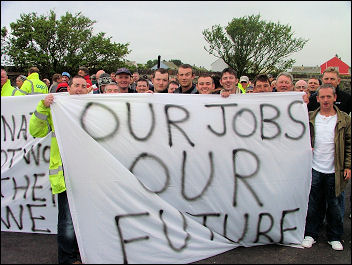
Through the combination of social and economic change, trade union organizations experience greater difficulty in carrying out their task of representing the interests of workers, partly because Governments, for reasons of economic utility, often limit the freedom or the negotiating capacity of labour unions. Hence traditional networks of solidarity have more and more obstacles to overcome. The repeated calls issued within the Church's social doctrine, beginning with Rerum Novarum[60], for the promotion of workers' associations that can defend their rights must therefore be honoured today even more than in the past, as a prompt and far-sighted response to the urgent need for new forms of cooperation at the international level, as well as the local level.

The mobility of labour, associated with a climate of deregulation, is an important phenomenon with certain positive aspects, because it can stimulate wealth production and cultural exchange. Nevertheless, uncertainty over working conditions caused by mobility and deregulation, when it becomes endemic, tends to create new forms of psychological instability, giving rise to difficulty in forging coherent life-plans, including that of marriage. This leads to situations of human decline, to say nothing of the waste of social resources. In comparison with the casualties of industrial society in the past, unemployment today provokes new forms of economic marginalization, and the current crisis can only make this situation worse. Being out of work or dependent on public or private assistance for a prolonged period undermines the freedom and creativity of the person and his family and social relationships, causing great psychological and spiritual suffering. I would like to remind everyone, especially governments engaged in boosting the world's economic and social assets, that the primary capital to be safeguarded and valued is man, the human person in his or her integrity: “Man is the source, the focus and the aim of all economic and social life”[61].